
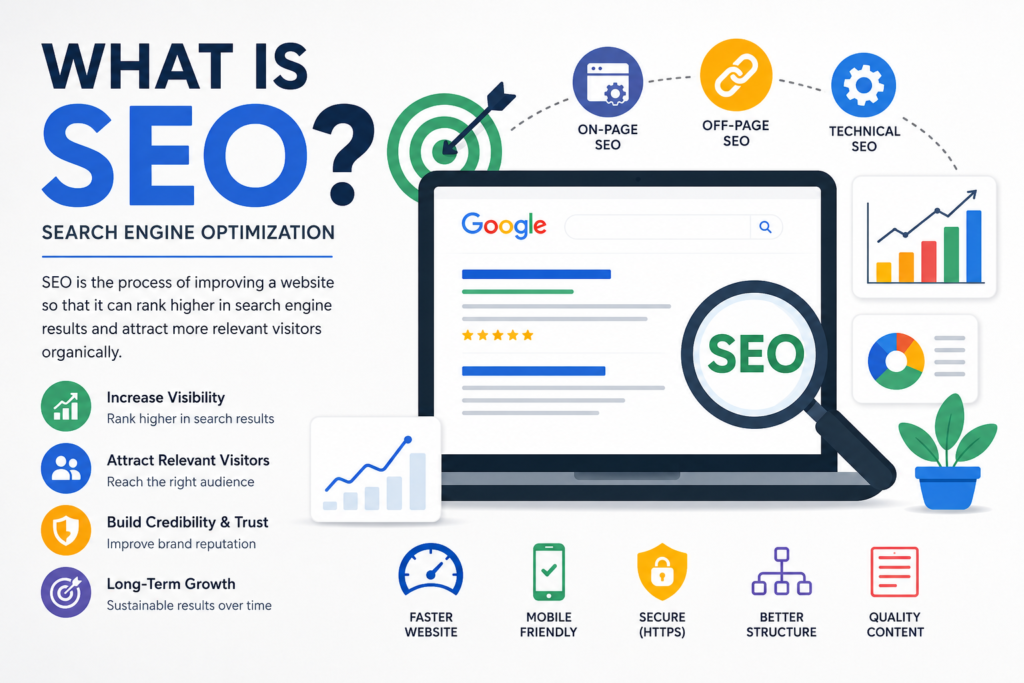
In today’s digital world, having a website is not enough. Whether you run a business, write a blog, sell products online, or provide professional services, people need to be able to find your website. This is where SEO, or Search Engine Optimization, becomes important.
SEO is the process of improving a website so that it can appear more prominently in search engine results when people search for information, products, or services related to that website. Search engines such as Google use complex algorithms to understand websites and decide which pages should appear for particular searches.
What Does SEO Mean?
SEO stands for Search Engine Optimization. It is a digital marketing technique used to improve a website’s visibility in organic, or unpaid, search engine results.
For example, imagine someone searches Google for “best digital marketing services in Faridabad.” Hundreds or thousands of web pages may be related to this topic. SEO helps a relevant website improve its chances of appearing among the search results.
The main goal of SEO is not simply to get more visitors. It is to attract relevant visitors who are genuinely interested in the information, products, or services offered by a website.
Why Is SEO Important?
Most people use search engines when they want to find information, compare products, learn something new, or find a local business. If your website does not appear where people are searching, you may miss valuable opportunities.
Good SEO can help a website:
- Increase organic traffic
- Improve online visibility
- Reach the right audience
- Build credibility and trust
- Generate potential customers
- Increase brand awareness
- Improve the overall website experience
- Support long-term digital marketing growth
Unlike paid advertising, organic SEO traffic does not require you to pay for every individual click. However, SEO requires consistent effort, quality content, technical improvements, and patience.
How Does SEO Work?
Search engines use automated systems called crawlers or search engine bots to discover and understand web pages. These pages are then processed and stored in the search engine’s index.
When a person performs a search, the search engine analyzes the query and attempts to provide the most useful and relevant results.
SEO helps search engines understand what your website is about and why your content may be useful to users.
Several factors can influence search visibility, including content quality, relevance, website structure, page experience, links, technical performance, and many other signals.
Main Types of SEO
SEO can generally be divided into several important areas.
1. On-Page SEO
On-page SEO focuses on elements that are present on your website.
This includes:
- Page titles
- Headings
- Keywords
- Website content
- Meta descriptions
- Image optimization
- Internal links
- URL structure
- Content readability
For example, if you are writing an article about SEO, you should clearly explain the topic and naturally use relevant terms such as “SEO,” “search engine optimization,” “SEO techniques,” and “digital marketing.”
However, keywords should be used naturally. Repeating the same keyword excessively can make content difficult to read and may not provide a good experience for visitors.
2. Off-Page SEO
Off-page SEO focuses on activities outside your website that can help build its reputation and authority.
One important part of off-page SEO is link building. When reputable and relevant websites link to your content, those links can help search engines understand that your website may be useful or trustworthy.
Off-page SEO can also involve digital PR, brand mentions, business listings, and other activities that help establish a website’s online presence.
The focus should always be on earning high-quality and relevant references rather than collecting large numbers of low-quality links.
3. Technical SEO
Technical SEO focuses on the technical aspects of a website that help search engines crawl, understand, and index its pages.
Important technical SEO areas include:
- Website loading speed
- Mobile-friendliness
- Secure HTTPS connection
- Website architecture
- XML sitemaps
- Robots.txt
- Broken links
- Proper redirects
- Structured data
- Indexing issues
A technically well-organized website makes it easier for both search engines and users to navigate the site.
What Are Keywords in SEO?
Keywords are words or phrases that people type into search engines.
For example, a person looking for information about SEO might search for:
- What is SEO?
- SEO meaning
- How does SEO work?
- SEO techniques
- SEO for beginners
- Best SEO practices
Keyword research helps website owners understand what their target audience is searching for.
However, modern SEO is not simply about inserting keywords into an article. Search engines are increasingly focused on understanding the meaning and intent behind searches. Therefore, content should be created primarily to answer users’ questions and provide genuine value.
What Is Local SEO?
Local SEO is especially important for businesses that serve customers in a specific geographical area.
For example, a restaurant, salon, real estate agency, photographer, repair service, or local shop can use local SEO to improve its visibility when people search for services nearby.
Local SEO can involve maintaining accurate business information, creating useful location-specific content, managing online business profiles, and earning relevant local mentions and reviews.
For example, a business might want to appear when someone searches for “digital marketing agency near me” or “real estate consultant in Faridabad.”
SEO and Content Marketing
Content and SEO work closely together.
A website can have excellent technical performance, but if it does not provide useful information, it may struggle to attract and retain visitors.
High-quality content can include:
- Blog articles
- Guides
- Tutorials
- Frequently asked questions
- Product information
- Service pages
- Case studies
- Videos
- Infographics
The best content answers real questions, demonstrates knowledge, and helps users accomplish something.
How Long Does SEO Take?
SEO is a long-term digital marketing strategy. It usually does not produce major results overnight.
The time required can depend on many factors, including:
- Website age
- Competition
- Industry
- Content quality
- Website authority
- Technical condition
- Keyword difficulty
- SEO strategy
- Consistency of work
Some improvements may become visible relatively quickly, while competitive keywords can take much longer.
This is why SEO should be treated as an ongoing process rather than a one-time task.
Common SEO Mistakes
Beginners often make several mistakes when starting SEO.
Some common mistakes include keyword stuffing, copying content from other websites, ignoring mobile users, creating low-quality pages, buying poor-quality backlinks, neglecting technical SEO, and focusing only on search engines instead of actual visitors.
Another common mistake is expecting immediate results. SEO requires testing, learning, improving, and consistently creating useful content.
SEO vs Paid Advertising
SEO and paid advertising are both valuable digital marketing methods, but they work differently.
With paid advertising, businesses pay platforms to display advertisements to selected audiences. SEO focuses on improving a website’s organic visibility in search results.
Paid advertising can provide traffic quickly, while SEO can help build sustainable organic visibility over time. Many successful businesses use both strategies as part of a broader digital marketing plan.
Conclusion
SEO, or Search Engine Optimization, is one of the most important parts of modern digital marketing. It helps websites become more visible in search engines, attract relevant visitors, build online credibility, and reach potential customers.
SEO involves much more than adding keywords to a website. It includes creating useful content, improving website structure, maintaining strong technical performance, earning quality links and mentions, understanding search intent, and providing a positive experience for visitors.
If you are building a new website, starting a blog, or growing an online business, learning SEO can give you a strong foundation for long-term digital growth. The most effective approach is to focus on users first: create helpful content, make your website easy to use, keep improving its technical performance, and follow ethical SEO practices.
In simple words, SEO helps the right people discover your website when they are searching for what you offer.