
Introduction
Social media marketing is one of the most effective ways for businesses to connect with their target audience, build brand awareness, generate leads, and increase sales online. With billions of people using platforms such as Instagram, Facebook, YouTube, LinkedIn, and X, social media has become an important part of modern digital marketing strategies.
But what is social media marketing exactly? In simple terms, social media marketing is the process of promoting a business, product, service, or personal brand through social media platforms. It involves creating valuable content, engaging with audiences, building an online community, and using both organic and paid strategies to achieve business goals.
For small businesses, startups, creators, and established companies, social media marketing can provide an affordable and measurable way to reach potential customers.
What Is Social Media Marketing?
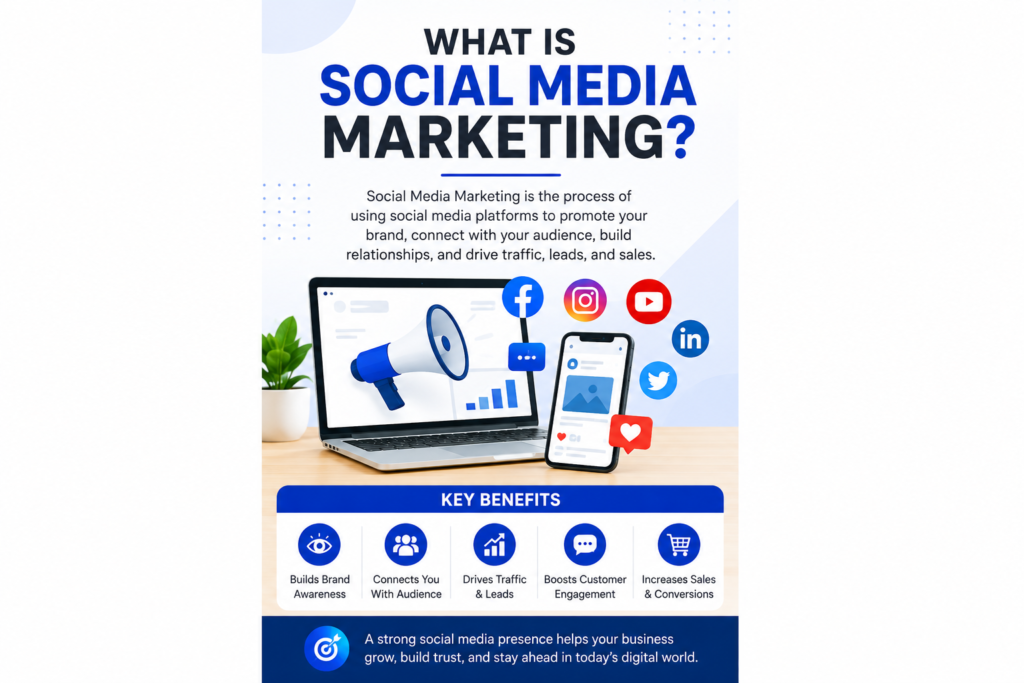
Social media marketing (SMM) is a digital marketing strategy that uses social networking platforms to promote a brand, communicate with customers, distribute content, and achieve marketing objectives.
A social media marketing strategy can include:
- Creating and publishing social media posts
- Producing videos, reels, stories, and graphics
- Building brand awareness
- Engaging with followers and customers
- Running paid social media advertisements
- Generating leads and website traffic
- Monitoring analytics and performance
- Managing online communities
- Collaborating with influencers and creators
The primary goal is not simply to gain followers. Effective social media marketing focuses on reaching the right audience and encouraging meaningful actions such as engagement, website visits, inquiries, leads, and purchases.
Why Is Social Media Marketing Important?
Social media has changed the way people discover brands and make purchasing decisions. Before buying a product or service, many customers search online, check social media profiles, read reviews, watch videos, and compare different businesses.
A strong social media presence can help a business remain visible throughout this customer journey.
1. Builds Brand Awareness
Social media allows businesses to introduce their brand to a large audience. Consistent posting, recognizable branding, and useful content can help people remember a business.
2. Helps Reach the Target Audience
Platforms provide powerful targeting and audience insights. Businesses can create content specifically for different customer groups based on interests, location, behavior, and demographics.
3. Increases Website Traffic
Social media posts can direct users to a company’s website, blog, landing page, product page, or contact form. This can generate additional traffic and potential leads.
4. Generates Leads and Sales
Social media marketing can support the complete marketing funnel—from creating awareness to generating inquiries and converting interested users into customers.
5. Builds Customer Relationships
Social media provides a direct communication channel between businesses and customers. Comments, messages, polls, and other interactive content can help brands build stronger relationships with their audience.
Major Social Media Marketing Platforms
Different social media platforms serve different purposes. Businesses should select platforms based on their target audience and marketing goals.
Instagram Marketing
Instagram is highly visual and works particularly well for brands that can communicate through photos, short-form videos, reels, stories, and creative graphics. Businesses can use Instagram to showcase products, services, company culture, testimonials, and educational content.
Facebook Marketing
Facebook offers businesses opportunities to publish content, create communities, communicate with customers, and run targeted advertising campaigns.
YouTube Marketing
YouTube is an important platform for video marketing. Businesses can create tutorials, product demonstrations, educational videos, reviews, interviews, and other long-form or short-form content.
LinkedIn Marketing
LinkedIn is particularly useful for B2B marketing, professional networking, recruitment, personal branding, and sharing industry-related knowledge.
X Marketing
X can be useful for real-time communication, industry discussions, news, opinions, announcements, and community engagement.
Types of Social Media Marketing
Social media marketing can be divided into several important areas.
Organic Social Media Marketing
Organic marketing refers to activities that do not require direct payment for advertising placement. Examples include regular posts, reels, stories, educational content, community engagement, and responding to comments.
The objective is to gradually build an audience and establish trust.
Paid Social Media Marketing
Paid social media marketing involves investing in advertisements to reach a selected audience. Businesses can promote products, services, websites, lead forms, apps, or special offers.
Paid campaigns can be optimized according to objectives such as awareness, traffic, engagement, leads, or conversions.
Influencer Marketing
Influencer marketing involves collaborating with creators who have an established audience. A suitable creator can introduce a brand to a relevant community and potentially increase awareness and credibility.
Social Media Content Marketing
Content is at the center of successful social media marketing. Businesses can create educational, entertaining, inspirational, promotional, and problem-solving content based on their audience’s interests.
How Does Social Media Marketing Work?
A successful social media marketing process usually follows several steps.
Step 1: Define Marketing Goals
First, a business should decide what it wants to achieve. Goals could include increasing brand awareness, generating leads, improving engagement, increasing website traffic, or driving sales.
Step 2: Identify the Target Audience
Understanding the target audience is essential. Businesses should consider factors such as age group, location, interests, problems, online behavior, and purchasing needs.
Step 3: Choose the Right Platforms
Not every business needs to be active on every social media platform. Selecting platforms where the target audience is most active can make marketing efforts more focused and effective.
Step 4: Create Valuable Content
The next step is developing content that provides value. A balanced content strategy can include educational posts, short videos, behind-the-scenes content, customer testimonials, FAQs, tips, and promotional offers.
Step 5: Publish Consistently
Consistency helps businesses maintain visibility and develop audience expectations. A content calendar can make it easier to plan and publish content regularly.
Step 6: Engage With the Audience
Social media is not only about publishing posts. Responding to comments and messages, participating in conversations, and encouraging discussions can help create an active community.
Step 7: Analyze Performance
Businesses should regularly review metrics such as reach, impressions, engagement, website traffic, leads, and conversions. These insights can help improve future campaigns.
Benefits of Social Media Marketing for Small Businesses
Small businesses can benefit significantly from social media marketing because it can provide access to large audiences without requiring the same resources as traditional advertising.
Some key benefits include:
- Increased online visibility
- Stronger brand recognition
- Direct customer communication
- Website traffic generation
- Lead generation
- Community building
- Better customer feedback
- Opportunities for targeted advertising
- Measurable marketing performance
A well-planned social media strategy can help a small business compete for attention in a crowded digital marketplace.
Social Media Marketing and SEO
Social media marketing and Search Engine Optimization (SEO) are different digital marketing strategies, but they can complement each other.
SEO focuses primarily on improving a website’s visibility in search engine results, while social media marketing focuses on reaching and engaging audiences on social platforms.
Social media can support an SEO strategy by increasing content visibility, attracting website visitors, strengthening brand awareness, and helping useful content reach a wider audience.
For example, a business can publish a detailed blog post on its website and then promote that content through Instagram, Facebook, LinkedIn, or other social platforms.
Common Social Media Marketing Mistakes
Businesses often make mistakes when starting social media marketing.
Posting Without a Strategy
Randomly posting content without clear objectives can make marketing efforts inconsistent and difficult to measure.
Focusing Only on Followers
A large follower count does not automatically mean a business is successful. Engagement, qualified leads, conversions, and customer relationships are often more meaningful metrics.
Ignoring the Audience
Social media should be a two-way communication channel. Ignoring comments, questions, and messages can negatively affect customer relationships.
Being Too Promotional
If every post tries to sell something, audiences may lose interest. Businesses should provide useful and entertaining content alongside promotional posts.
Not Measuring Results
Without analytics, businesses cannot easily determine which content and campaigns are working effectively.
Conclusion
Social media marketing is an essential part of modern digital marketing. It helps businesses build brand awareness, connect with their target audience, generate leads, increase website traffic, and develop long-term customer relationships.
The most effective approach is not simply to post frequently. Businesses need a clear strategy, a defined target audience, valuable content, consistent communication, and regular performance analysis.
Whether you are a small business owner, startup, freelancer, creator, or established company, understanding what social media marketing is and how it works can help you build a stronger online presence and achieve measurable marketing goals.
Frequently Asked Questions About Social Media Marketing
What is social media marketing in simple words?
Social media marketing is the process of using social media platforms to promote a brand, product, service, or business and connect with potential customers.
Is social media marketing useful for small businesses?
Yes. Small businesses can use social media to increase visibility, communicate with customers, generate leads, promote services, and build brand awareness.
What are the best social media platforms for marketing?
The best platform depends on the target audience and business objectives. Instagram, Facebook, YouTube, LinkedIn, and X can all be useful for different types of businesses.
Is social media marketing free?
Organic social media marketing can be done without paying for advertising, although businesses may invest in content creation, tools, or professional services. Paid social media advertising requires an advertising budget.
How long does social media marketing take to show results?
Results vary depending on the industry, audience, content quality, consistency, competition, and marketing strategy. Building a strong social media presence generally requires consistent effort over time.